Page 3
Searches the whole library — filter by sim & category on the results page
Version 1.1 of a logbook recovery tool addresses corrupted records clogging the logbook, allowing the system to restore visibility by removing the faulty record. New records continue to be added bu…
 230.71 KB
 19.6KApr 2007
 4/5
4/5
TMLE increases the maximum image resolution from the standard 1024x1024 to 2048x2048 or 4096x4096, enabling higher-quality assets. Credits go to Steve Frost with additional support from Brandon Fil…
2.6 MB8.1KJun 2013
This utility converts XML flight plans (.pln) into the .rt2 format used by add-on FMC routes, including PMDG. It only processes XML-pln inputs, creates an .ini file after the first conversion to st…
322.54 KB5.3KJun 2013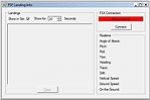
A lightweight tool polls the simulator every 100 milliseconds to display landing performance, producing a landing summary for each touchdown. It includes a Landings Panel for multiple landings and …
142.7 KB4KJun 2013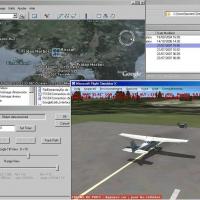
YAGET_X_vn.n.exe writes either a single position or a complete path to KML files, such as test_earth_link.kml and test_path.kml, with each leg roughly 1 NM, and can follow the current position in t…
1.11 MB3.1KJun 20135/5 4
4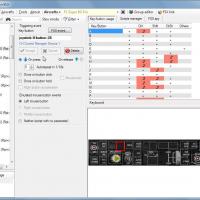
An enhanced interface consolidates a comprehensive input controller setup and a hangar aircraft manager, while ChartViewer presents an airport and navaid catalog. The configuration adds Spot Plane …
1.44 MB3KJun 20136
John Masterson authors the program, version 090.2624, which reads BGL files from Bglcomp and XML files created by other tools. The interface presents a tree view of contained objects, and a propert…
2.04 MB3KApr 20074/5Version 1 beta presents as a disassembler for .bgl files in the new format, producing structured data through an XML representation. The XML output can be compiled with bglcomp, and Winfried Orthma…
548.1 KB3KApr 20074/5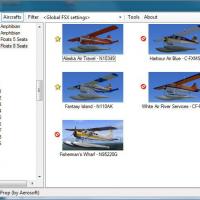 Patch
PatchBy Eugene Motorny, a fix brings FSXcontrols.exe to version 4.0.2, addressing startup crashes when certain third-party aircraft are installed, notably Captain Sim models. The executable must replace…
418.48 KB2.7KJun 20131
The control suite provides a GUI with input setup, hangar aircraft management, and a chart viewer that loads airport and NAV aids information via an index image. FlexyCamera supports Cockpit, Airfr…
1.27 MB2.4KJun 20135/56The utility automatically captures a dynamic screenshot of the currently loaded aircraft and generates the corresponding thumbnail for the select aircraft menu. It saves the final image directly in…
186.08 KB2.1KApr 20074/5
A utility converts .pln flight plans into Carousel Inertial Navigation System IV/a (CIVA). Users drag and drop a .pln file onto the icon to trigger conversion, or open the program and select Conver…
14.9 KB1.9KJun 2013
By overwriting any existing ENBSeries component, the add-on introduces a green-on-black night vision effect and includes d3d9.dll, enbpalette.bmp, and enbseries.ini in the main installation folder.…
544.19 KB1.9KNov 20195/54Version 1.0 addresses flight-plan conversion by translating an older two-standard format into the kit-defined flight plan structure, enabling compatibility with a builder named Trafficdatabasebuild…
30.31 KB1.9KApr 20071/5
Two operating modes drive this tool: auditing image references and modifying .x content. Auditing reports identify all image references and their counts, while the tweaking mode injects multiple ma…
277.34 KB1.9KJun 2013Aimed at flightsim enthusiasts, this tool links to real-world air traffic control through a database of live feeds accessed over the Internet and interacts with simulation software. The current ver…
638 KB1.5KJun 2013Four utilities by Michael Heise drive AI traffic tasks: aitchk.exe scans for missing aircraft data, aitmod.exe updates configurations to current standards, ait2x.exe converts an older traffic forma…
1.48 MB1.2KJun 2013
Designed by Andreas Schwarz, the tool offers an aircraft overview and, in this version, enables editing of aircraft data and thumbnail updates within a redesigned interface. It includes a callsign …
1.66 MB1KJun 20131
Navari offers a compact flight planner/navigation display and autopilot, enabling flight creation via simple clicks and imports from a routing tool. It lets users complete routes on local airfield …
24.57 MB958Jun 20134An integrated toolkit provides a browser for HTML, DOC, RTF, TXT, XML and PDF, plus image formats JPG, GIF, PNG, SWF and BMP, and direct links to 16 key configuration files such as DLL.XML and SimC…
1.04 MB722Jun 2013