Page 58
Searches the whole library — filter by sim & category on the results page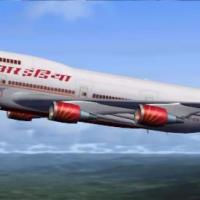 Repaint
Three variants exist for the iFly 747-400, featuring a standard, a Virtual Cockpit edition, and a Virtual Cockpit/Cabin version, each carrying atc_id VT-ESN and atc_flight_number VTESN for Air Indi…
 6.11 MB
 3.6KJul 2011
 1
1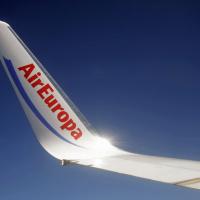 Repaint
The model builds on the Boeing 737-800 baseline and carries registration EC-IDT for Europa today. Its explicit flight number is 1402, and the named variation is AIR EUROPA PEPETRAVEL.COM, aligned w…
386.01 KB3.6KAug 20111 Base Model
Two variants, SCVA N6901L and The Southerner, exist with a default B737-800 cockpit and virtual cockpit. The model uses 32-bit BMP images with no mipmaps and depicts fully animated control surfaces…
19.14 MB3.6KApr 20144 Base Model
The A320-211 model comes from Project Airbus, with color work by Fanis Giannoulakis. ATC identifiers mark it as Aegean with atc_id A3 and atc_flight_number 1096, while ui_type is A320-211 and ui_va…
8.88 MB3.6KApr 20141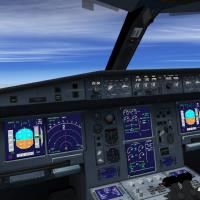 Base Model
The A330-200MRTT carries a RAAF identity and includes a working virtual cockpit. It runs with SP1 and SP2, is not tested for DX10, and uses assets drawn from a default Airbus_A321 set in the Tom_33…
13.09 MB3.6KJun 2010 5/54
5/54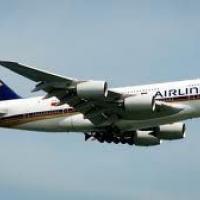 Patch
PatchA380-800 airframe bears registration 9V-SKA, and SKAI models the aircraft, with artwork credited to Gabriel McManus. The entry features two image assets named singapore-airbus-A380-800.jpg and sing…
168 KB3.6KAug 20111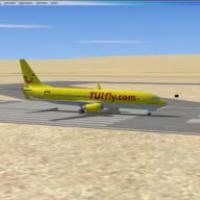 Repaint
TUIfly operates the Boeing 737-800 bearing registration D-ATUG, representing a single variant focused on the default 737-800 model. Surface finishes are supplied for the base aircraft, with attribu…
239.06 KB3.6KJan 20091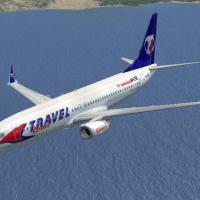 Repaint
An adaptation of the default B737-800 appears in Travel Service colors, identified as TVL, by Laszlo Bona. The associated image uses the filename tvl738x.gif, anchoring the branding to the TVL iden…
3.12 MB3.6KJun 20072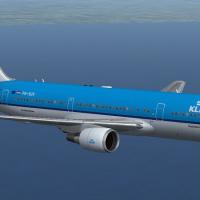 Base Model
Two variants carry registration PH-BZK with construction numbers 27614/651 and 27957/587, offered with or without winglets. The configuration uses the default 737-800 cockpit and a POSKY utility pa…
24.69 MB3.6KApr 20147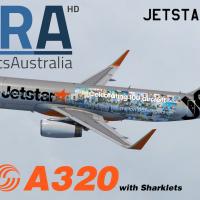 Payware Repaint
Jetstar Airways operates an A320 with sharklets registered VH-VFN, celebrating 100 aircraft and over 100 million passengers, a milestone. The file Airbus A320 NEO Jetstar VH-VFN.zip relates to the …
5.72 MB3.5KFeb 20141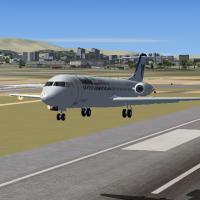 Base Model
A Fokker 100 variant for Iran Air presents a fully modeled Virtual Cockpit and a functional Flight Management Computer for authentic short-haul operations. Premier Aircraft Design develops it, with…
13.33 MB3.5KApr 20145/56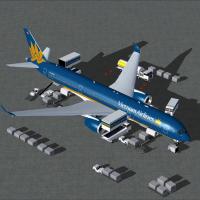 Base Model
Version 4 CamSim presents the A350-900 for Vietnam Airlines with a faithful airframe and enhanced ground handling, by Camil Valiquette. Interactive Ground Servicing adds trucks, loaders, and auxili…
5.25 MB3.5KFeb 20162/53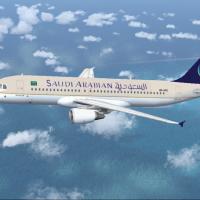 Base Model
An Airbus A320-214 carries Saudi Arabian Airlines markings and uses 32-bit color data, and is paired with the Project Airbus A320 base model by Mohammed Al-Khalifa. The A320-214 designation anchors…
8.61 MB3.5KAug 20111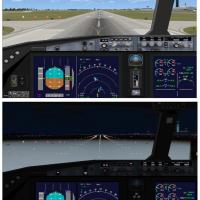 Base Model
CamSim presents a Boeing 787-10 variant for Air France, featuring a detailed exterior model and a second-generation Animated Ground Servicing system, while credits go to Camil Valiquette for the pr…
5.28 MB3.5KAug 20114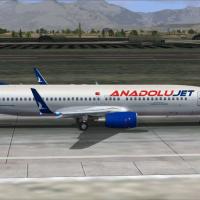 Payware Repaint
Two variants of a Boeing 737-800 with winglets are designated Normal JGJ and Wide JGJ for the Anadolujet fleet, carrying the registration TC-JGJ and ATC flight number TK738, with image assets in 20…
11.7 MB3.5KApr 20146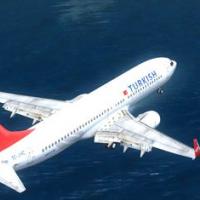 Payware Repaint
Turkish Airlines operates a Boeing 737-800 variant created by Jonas Sadkowski. The focus centers on the 737-800 model family, with Sadkowski credited as the author, and the visuals emphasize brandi…
7.87 MB3.4KAug 20111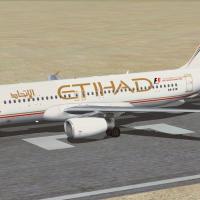 Base Model
Etihad Airways operates the Airbus A320-232, registration A6-EIN, which uses the Project Airbus base, depicts IAE engines and accurate fuselage markings, and resides in the folder P A Etihad A320-2…
19.24 MB3.4KApr 20142 Repaint
Three named options cover the A330-200 lineup for Hawaiian Airlines, including Makali'i, Hokule'a, and Iwakeli'i, each assigned unique atc_id values N380HA, N381HA, and N382HA. By Daniel Furnkas, t…
10.64 MB3.4KAug 20115/54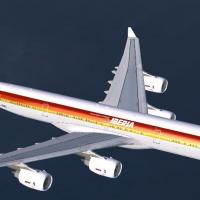 Repaint
An Iberia A340-642, registered EC-INO and named Gaudí, is depicted with exterior weathering and a night map aligned to the passenger window layout. It relies on the Tom_A340-600 base model by Thoma…
1.31 MB3.4KAug 20111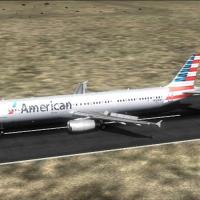 Payware Repaint
An American Airlines A321 variant powered by IAE engines, by Dimitrios Moschos, appears as a v25 model. It registers N583UW and carries the American airline code with flight number 117, and it incl…
5.86 MB3.4KJan 20158