Page 4
Searches the whole library — filter by sim & category on the results page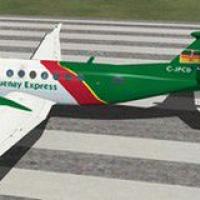
Marc Renaud supplies six external camera references and two interior perspectives for a Beechcraft turboprop, using a dedicated definitions file to deliver fresh viewpoints of the fuselage includin…
 138.09 KB
 551Oct 2011
 1
1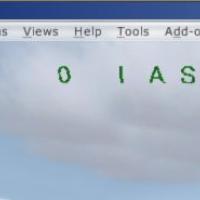
InfoGauge delivers a compact digital readout of altitude, indicated airspeed, and heading after a member requests larger text than the default, with InfoGauge.cab placed in the Target Plane's panel…
52.92 KB401Jan 20131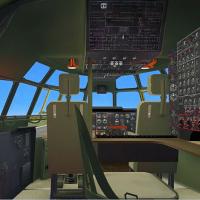
A military cockpit for the B-377/C-97 adds Air Force pilot visuals in 1950s gear, navigator map visuals, and seat surfaces with side rails and snaps, all painted in green zinc-chromate to evoke a C…
4.26 MB391Jan 20132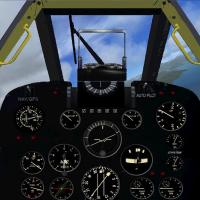
An enhanced 2D panel for Rob Richardson's Fairey Gannet features modified cameras and a saved Vancouver International airport flight with two torpedoes ready for drop. Erwin Welker provides the con…
1.64 MB345Oct 2011 5/54
5/54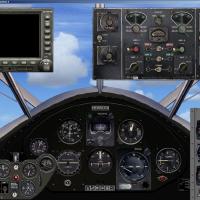
Two configurations exist for a 2D panel in a J2F Duck variant, one with compass and artificial horizon, the other adding Sperry Compass Heading Autopilot, Sperry AHI Pitch Autopilot, and GPS. Popup…
2.54 MB277Oct 20113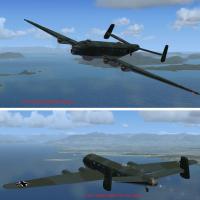
Cameras and weapon effects accompany the Junker Ju-290, with the rear fuselage guns insertable and capable of a full 360-degree swing, alongside an internal tailgunner view and several external vie…
332.31 KB274Jan 20132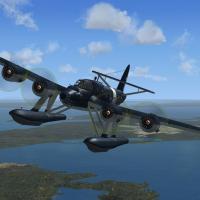
Erwin Welker composes a panel setup for the CANT Z512 and its Z1014 bomber, featuring six external and one internal cameras including three gunner views, with a light and smoke system tied to weapo…
268.92 KB255Jan 20132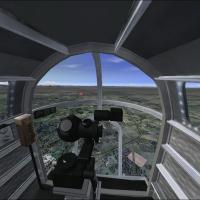
Six panel-view cameras reveal the Beechcraft AT-11's inner fuselage, bomb storage room, bombardier's seat, and turret gunner's place, plus four external views. Configuration by Erwin Welker, origin…
657.82 KB203Oct 20115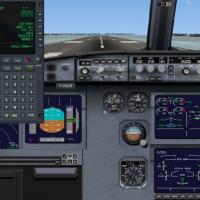
An Airbus Panel reworked by Marco Spada includes Garret Smith's freeware FMC, which must be downloaded separately online. The combination showcases two named contributors and the FMC as a separate …
846.84 KB5.5KOct 20115/51
An automated screen checklist for the Project Airbus A380 uses Tom Ruth's A340 panel, and a PDF checklist file is included to aid reference; the pairing of airframe and cockpit interface anchors th…
432.7 KB4.6KMay 2013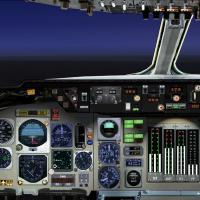
A trio of cockpit panels for the DC-10 provides one analogue and two ribbon-gauge layouts, distributed in KW_DC-10_SILVA_Ribbon, KW_DC-10_SGABRITTON_Ribbon, and KW_DC-10_SGABRITTON_Analogue folders…
70.41 MB3.2KJan 20135/51
The patch is compatible with PA321FD_V3.ZIP, PA321FD_V3_CFM.ZIP, and PA321FD_V3_IAE.ZIP to address the A321 variant panel, spanning all engine types (CFM and IAE) by Francois Dore. It fixes pushbac…
17.64 MB3.2KJan 20133/5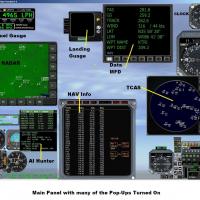
Three panel variants cover glass cockpit, analog, and a combo layout, with the latter adapting to jet, turboprop, prop, or helicopter types. Version 3.0 introduces new primary flight gauges and pop…
11.33 MB3.1KOct 20115/54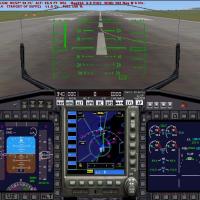
An F-15 cockpit panel by Chuck Dome receives a revision that ensures functional compatibility while staying usable on two-engine fighters. Bob Chicilo is credited, and a reference image labeled pan…
1.89 MB3KNov 20065/51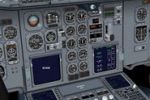
Thomas Ruth provides a panel correction for the Airbus A300 and A310, correcting an ECAMS that stays off in 3D cockpit mode. Marc Renaud credits the remedy, achieved by a straightforward edit of th…
401.63 KB2.9KOct 2011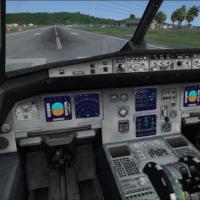
By Kevin McDermott, a new set of cockpit visuals for the default A321 enhances the virtual cockpit with increased realism. The work focuses on the standard variant and carries the creator's credit,…
2.71 MB2.8KJan 20135/52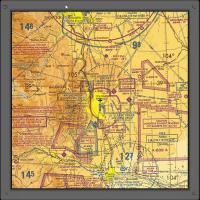
Designed with PFD and EICAS glass gauges plus chart readouts, it operates on a separate computer and adds a sound module that plays ATC chatter and altitude call outs on landing, by Kapock Cavanaug…
411.91 MB2.8KJan 20135/53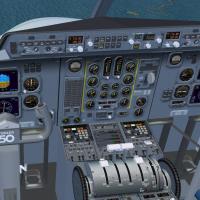
Emile Lancee implements a cockpit upgrade for the Fokker 50, relying on the payware Precisionaerobus base and overwriting existing data while excluding proprietary gauges. Simmers choose between De…
19.74 MB2.3KJan 20138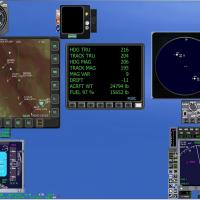
Version 2.1 introduces a compact cockpit panel with pop-up windows and an added Analog Cockpit panel. It integrates Karol Chlebowski's Pave Tack gauge for outside viewing in any direction plus up a…
5.53 MB2.3KOct 20115/52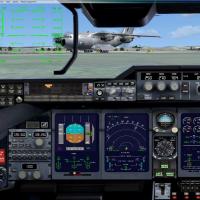
A single authentic cockpit panel for the Airbus A400 military transporter is presented, featuring photorealistic bitmap art and gauge visuals by Marco Spada of Rome. It integrates default XML gauge…
1.6 MB2.1KOct 20111