Page 6
Searches the whole library — filter by sim & category on the results page
Demo version runs with the Cessna 172, while the full edition supports most standard aircraft and many add-ons. It presents events such as vacuum failure and engine fire, includes a Timed Event opt…
 9.07 MB
 924Jun 2013
 1/5
1/5 2
2
AiSort v1.0.0.50 is a Visual Basic 6 utility with a runtime requirement that takes TrafficTools style flight plans, sorts them, and converts them into text for a TrafficDatabaseBuilder workflow to …
64.4 KB883May 20074/5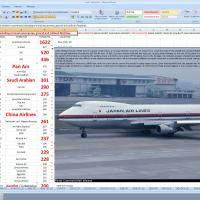
Grounded in the ASN Aviation Safety Database, this Excel file compiles airplane crash history from 1945 to today. Richard Monnin authors the work, presenting major narratives with accompanying phot…
43.89 MB877Jun 20135/51An efficient tool lets you place and command ships or fleets in the sim, avoiding edits to traffic or mission files. It requires Java JRE 1.5+, SP1 support with SP2 untested and Vista not tested; c…
915.82 KB801Jun 2013
Winfried Orthmann delivers a utility that converts an XML file into a group of shape files for processing with shp2vec included in the SDK. It includes example files, and Winfried Orthmann receives…
128.75 KB761Apr 20071
Operates with an open interface that lets users create traffic, and a demo limits departures to four and arrivals to four; it reads enrou.txt and sched.txt to display aircraft according to those sc…
2.23 MB701Jun 2013
Three modules comprise the offering: a GUI multifunction module, the EQgauges.dll chart viewer, and the EQmodule.dll GhostMouse input driver. Version 2.1 adds in-flight GhostMouse configuration, op…
977.01 KB695Jun 20135
The Key2Mouse tool v1.03 maps user-defined keystrokes to mouse actions, enabling programmable controllers to operate software that accepts mouse input for simulated instruments. Developed for a fli…
1.83 MB695Apr 2007
Sim Network links a flight simulator across multiple computers, using wireless or wired connections to mirror aircraft movements and position on a second machine running the same software via Simco…
1.04 MB660Jun 20131
A configuration tool operates on the aircraft.cfg file, enabling changes to parameters and, through AircraftTweakUI, installation and removal of visual modifications on your system. The latest vers…
661.33 KB518Jun 20133
By Alexander Brand, the utility edits the module configuration files exe.xml and dll.xml, requiring the .NET 2.0 framework. Version 0.4, dated 7 February 2008, fixes saving issues tied to file form…
2.54 MB505Jun 2013
Three components comprise these elements: a GUI control utility configures button and keyboard inputs and camera parameters; ChartViewer.dll presents a gauge with nearest airport data, including IL…
786.93 KB486Jun 20136
An alias installer for Ultimate Traffic enables all AI aircraft to use Traffic Sounds, includes a manual install option for hands-on edits, and the process hinges on purchasing Traffic Sounds to en…
1.54 MB475Jun 2013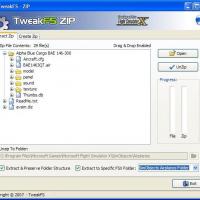
TweakFS Zip operates as a stand-alone utility that unpacks and creates zip archives without a third-party program, and it presents a graphical tree view of the folder structure. It auto-detects the…
964.32 KB417Jun 20135/51
An adaptable utility that converts user-defined keypresses into mouse actions or keystrokes and transmits them to remote computers on a network, enabling control of software running on linked PCs. …
1.94 MB401Apr 2007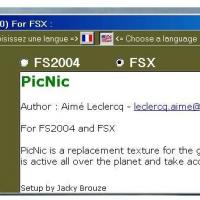
Documentation notes problems with the PicNic interface and points to the PICNIC10.ZIP file, authored by Leclercq Aime, for guidance. A visual capture accompanies the page, illustrating the PicNic i…
346.64 KB387Jun 20131
Five custom utilities enable hundreds of configuration tweaks, with trial versions remaining fully functional for 30 days and a built-in one-click restore function that reverts any changes, plus 12…
43.56 MB383Jun 2013The utility builds new flight plans, converts legacy Ttools plans to current compatibility, and edits, deletes, or adds to existing plans while creating auto plans using selected aircraft and airpo…
442.36 KB381Jun 2013Developed for users with a G15 keyboard, this beta plugin displays speed, altitude, flaps and other current aircraft status in the keyboard information window, with a second Beta release by Team-Ch…
386.04 KB317Jun 2013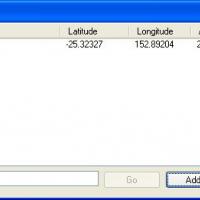
This utility saves positions by storing latitude, longitude, altitude, and heading, enabling jumps to saved points. It minimizes to the system tray and presents a right-click context menu, with ver…
548.5 KB197Jun 20131