Page 8
Searches the whole library — filter by sim & category on the results page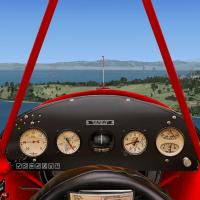
A red panel complements the Piper Cub’s default red paint, offering a matched cockpit accent. By Andy Johnston, the entry lists two image files, Red-Piper-Cub-Panel-fsx1.jpg and Red-Piper-Cub-Panel…
 662.68 KB
 396Oct 2011
 1
1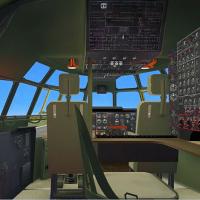
A military cockpit for the B-377/C-97 adds Air Force pilot visuals in 1950s gear, navigator map visuals, and seat surfaces with side rails and snaps, all painted in green zinc-chromate to evoke a C…
4.26 MB390Jan 20132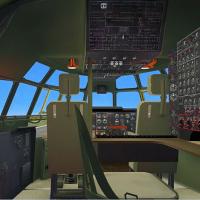
The military cockpit configuration for the A2A B377/C97 receives the grn cockpit fix, which replaces missing air conditioning and pressure gauges and changes floor surfaces to dark grey. Paul Grubi…
4.13 MB381Jan 20132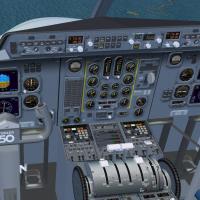
A cockpit refinement for the Fokker 60 re-sculpts the panel for widescreen use and adds two navigation options—Delco Carousel INS and BendixKing/Honeywell FMS—gauges from Precision Aerobus do not a…
26.07 MB365Jan 20138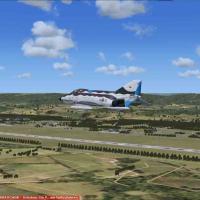
Version 1 of Pferdsfeld AB, located in southwestern Germany near Bad Sobernheim, includes two bgl files ready for placement and static aircraft by Guy Diotte. Historical notes document early Royal …
4.94 MB350Mar 2012 5/52
5/52
Three CASA C-295 variants—M, MP, and AEW—use a common camera definitions set embedded in the aircraft.cfg, yielding eight exterior views and five interior ones across all models. Camera definitions…
80.48 KB345Oct 2011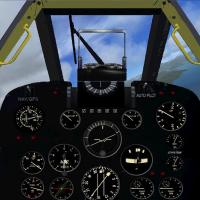
An enhanced 2D panel for Rob Richardson's Fairey Gannet features modified cameras and a saved Vancouver International airport flight with two torpedoes ready for drop. Erwin Welker provides the con…
1.64 MB344Oct 20115/54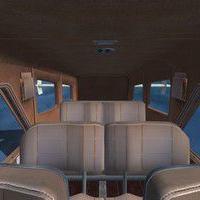
Marc Renaud delivers refined camera perspectives for the De Havilland DHC-2 Beaver in a classic flight sim, adding eight external viewpoints and three cabin-focused angles. The viewpoints are embed…
90.34 KB343Oct 20112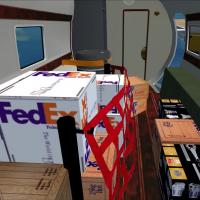
Contributors add four aircraft and four cabin views for the Avia-56 from Milton Shupe, Nigel Richards, John Smith, and James Banks, with help from SOH members, requiring AV56MS.ZIP. The camera defi…
257.42 KB328Jan 20132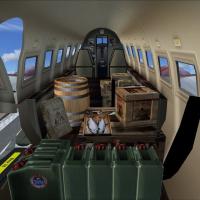
Camera definitions provide four aircraft angles and five cabin views, highlighting interior detail for both passenger and cargo Avia-57 variants. The setup requires AVIA57PKG.ZIP, with configuratio…
278.53 KB328Jan 20132 Base Model
Developed for the US Navy by Frank Akers, the YE-ZB system guides aircraft to a carrier with an AN/ARR-2 UHF receiver and a Morse signal denoting a 15-degree arc. Two aircraft include necessary gau…
28.23 MB310Jan 20135/539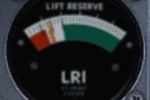
An adaptation of a lift reserve gauge for GA aircraft presents a readout of remaining speed and angle of attack before stall. By Don Bodenstedt, it includes two versions and a cab file named LiftRe…
47.54 KB295Jan 2013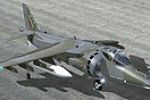 Patch
PatchMarc Renaud authors a camera definitions.txt file linked to the Harrier views, and the original material records this attribution clearly. The original material shows that the camera definitions.tx…
2.57 KB289Jan 2013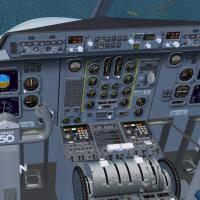
Emile Lancee crafts a cockpit upgrade for the Fokker 60, offering a switchable interface between Delco Carousel INS and BendixKing/Honeywell Flight Management System. The setup enables operation fr…
10.68 MB281Jan 20138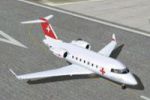
Eight external camera positions and five virtual cockpit viewpoints accompany the Bombardier Challenger CL-604, with camera definitions integrated into the aircraft.cfg and the accompanying camera …
92.68 KB277Oct 2011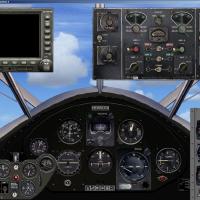
Two configurations exist for a 2D panel in a J2F Duck variant, one with compass and artificial horizon, the other adding Sperry Compass Heading Autopilot, Sperry AHI Pitch Autopilot, and GPS. Popup…
2.54 MB276Oct 20113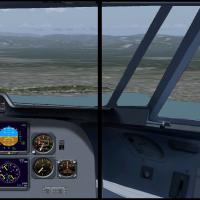
Two-display configuration for the Fokker 50 places the first officer’s instruments on the left panoramic monitor and is optimized for widescreen layouts, offering Delco Carousel Inertial Navigation…
39.59 MB274Jan 20138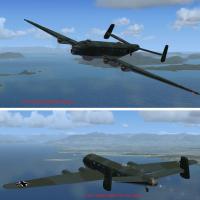
Cameras and weapon effects accompany the Junker Ju-290, with the rear fuselage guns insertable and capable of a full 360-degree swing, alongside an internal tailgunner view and several external vie…
332.31 KB273Jan 20132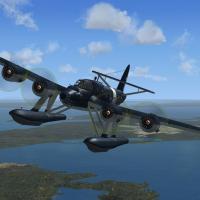
Erwin Welker composes a panel setup for the CANT Z512 and its Z1014 bomber, featuring six external and one internal cameras including three gunner views, with a light and smoke system tied to weapo…
268.92 KB254Jan 20132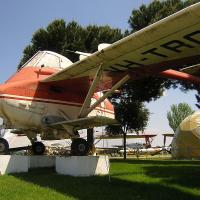
As a two-dimensional cockpit panel, it uses panel.dno and borrows two gauges from the Robinson_R22.cab, with remaining instruments drawn from standard Cessna 172/182 gauges. The AirTruk is a single…
659.25 KB219Oct 20112