Scenery Addons for Microsoft Flight Simulator 2004: A Century of Flight
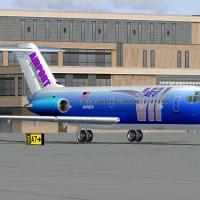
Version 7.0 of AEU7 broadens enhancements to default airports worldwide coverage, upgrading runway, taxiway, and tarmac surfaces along with airport buildings and lighting, and adds special reflecti…
 8.44 MB
 15.5KNov 2009
 5/5
5/5 14
14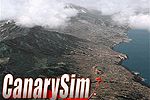
La Palma, El Hierro, La Gomera, Tenerife and Gran Canaria are covered with a 19-meter custom mesh and high-definition maps for all islands, by CanarySim. Full autogen coverage and night lighting cr…
239.27 MB10.8KJan 20105/5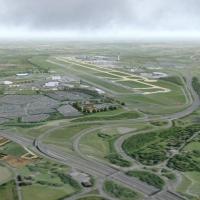
Version 7.0 presents a detailed rendition of a London-area airport, using a two-dimensional base image drawn from a composite aerial photograph produced by The Geoinformation Group Ltd. The layout …
4.51 MB9KJan 20105/51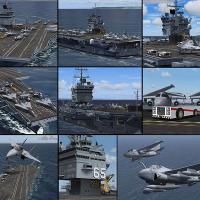
The USS Enterprise carrier model shows a complete surface detailing and a single landing area near Puerto Rico. The complete version spans ten locations worldwide, with deck configurations includin…
9.71 MB3.4KJan 20101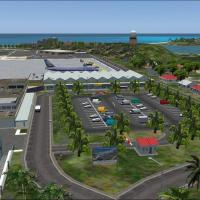
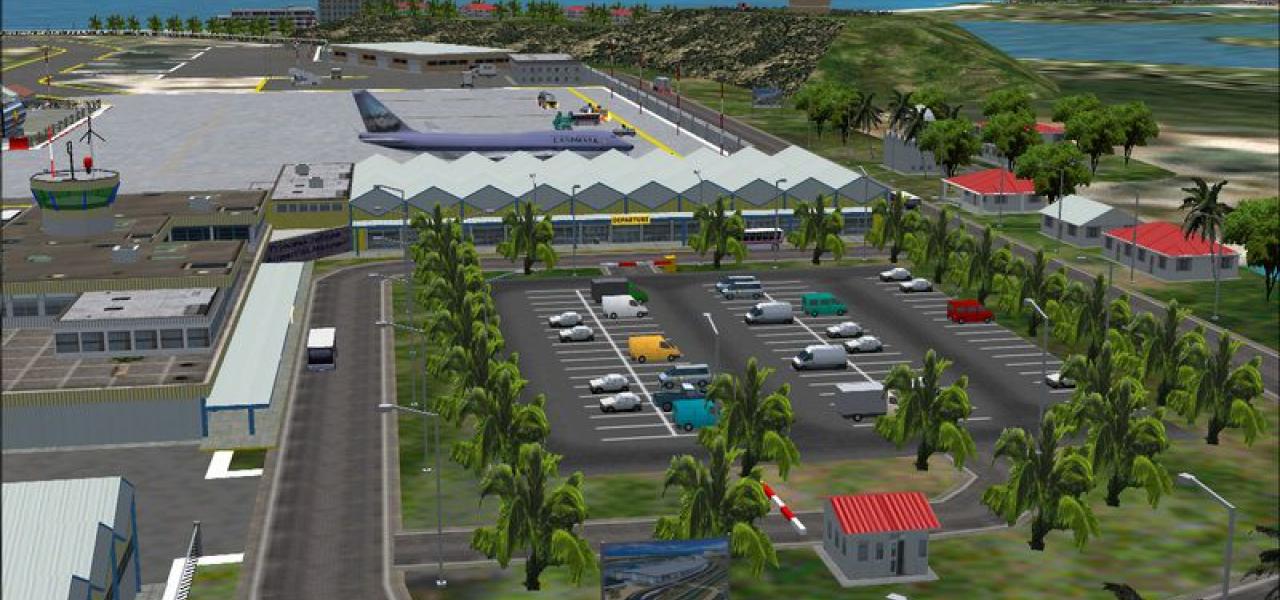
Version 1.2 adds an ILS on Runway 9 at the airport on the Caribbean island of St-Maarten, using 110.10 MHz, though the real facility is not equipped with this instrument. It also adds a weather sta…
4.81 MB15.8KNov 20095/55
By Mick Posch, replacement visuals for trees may work in earlier versions. They replace default tree appearances without altering size, placement, or quantity, and they add variety and realism acro…
1.59 MB4.4KJan 2010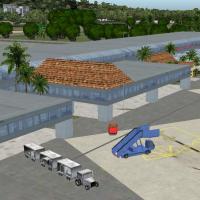
Version 2 by Bill Melichar marks the Tahiti adaptation, now aligned with the sim and removing prior palm and baggage carts scale issues. The terrain mesh for French Polynesia by Rolf Keibel and Joh…
5.59 MB4KNov 20035/52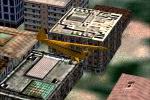
Autogen spans the globe with a three-dimensional effect and a broader range of surface finishes. AutoGen3D.JPG appears as the accompanying image by Valentin Casares, reinforcing the worldwide scope…
157.01 KB5.8KOct 20065/5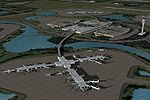
FS2004 rendition of the KMCO airport in Florida carries a 2008 date and credits Jaxan Prier and Jose Gutierrez of Mach-1 Design Group. The image named orland08.gif appears alongside the material fo…
2.37 MB5.7KDec 2009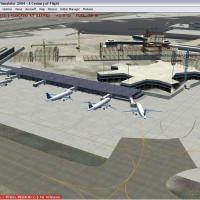
Version 4 introduces the American Airlines terminal and a JetBlue terminal at John F. Kennedy International Airport in New York, while refining jetway positioning and creating more usable gates. Te…
5.04 MB4.8KDec 200915
Antonis Antoniou and Marios Anastasiou present Larnaca International Airport (LCLK) in Cyprus, identifying its IATA code and noting the location near the city of Larnaca, with two authors collabora…
763.81 KB3KJan 2010
Version 1 of NOVA Gold Visuals, by Rafael Garcia Sanchez, comprises 24 photorealistic visuals with night effects depicting hangars, finger gates and terminals, reflecting the kinds of common object…
1.24 MB2.7KJan 20101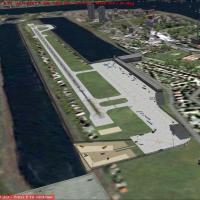
EGLC, in the United Kingdom, appears as a project by Frederik Mohrmann, basing the work on photos. Photos serve as the basis, and Frederik Mohrmann remains the author for the EGLC-focused layout to…
571.37 KB2.4KDec 20097Bremen airport (EDDW) presents a realistic layout with dynamic operation featuring wind-sensitive aircraft, passenger gates, catering and fuel trucks, and follow-me cars. The dynamic objects animat…
4.96 MB1.9KNov 2009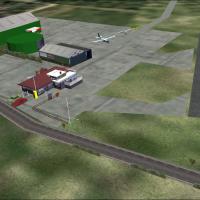
A small airfield sits on the west coast of the holiday-land beside a favorite beach. A nearly 8 km long sandbank forms at low tide, and the image file edxo_2k4.jpg accompanies the entry for reference.
1.95 MB1.5KAug 20042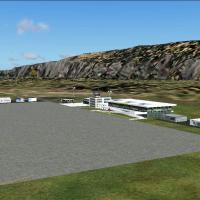
On Samos Island in Greece, the airfield carries IATA code SMI and ICAO designation LGSM, and features a single 2030-meter runway at 6 meters elevation, located at 37.7000 north, 26.9000 east, situa…
1.12 MB1.4KJan 20062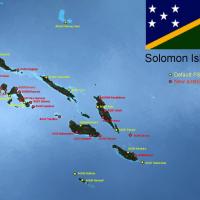
The collection adds 19 new airstrips across the Solomon Islands, including AGAF Afutara and AGAR Arona/Ulawa. Elevation fixes or workarounds are applied to AGGP Parasi and AGGT Santa Anna, while So…
423.46 KB1.1KJan 20062/53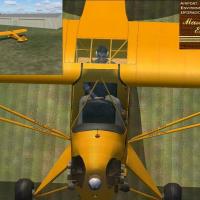
Master's Edition of the MX upgrade expands coverage to every global airport, from the largest hubs to the smallest, by night or by day. It adds special night lighting and seasonal techniques, and a…
7.97 MB13.7KJun 20045/510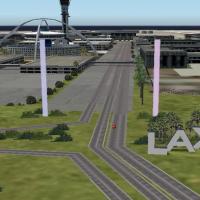
Powerful pylons at the perimeter illuminate in color in sync with the central tower and restaurant cluster, while a clearly visible LAX sign greets arrivals. Bill Melichar shortens the 405 Freeway …
1.64 MB12.8KNov 20033
Gmax 1.2 creates the jetway model, Arno Gerretsen's CAT program animates its operation, and Lucio Lepore assigns authorship for the jetway animation, while the same trio of tools and names appear a…
1.75 MB9.2KJan 20105/51