Page 16
Searches the whole library — filter by sim & category on the results page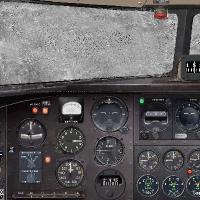 Base Model
A Douglas DC-3 links to the Radio Range v4.0 file RR40.ZIP. It includes two new panels, more realistic Radio Range beam sounds, and an icing model with visible ice on the windshield during icing co…
 14.03 MB
 837Mar 2013
 1
1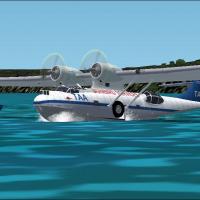 Base Model
The PBY-5A Catalina serves with Trans Australian Airlines on New Guinea routes, later styled Sunbird Services, with two airframes used until July 24, 1958. Removing the undercarriage and hydraulics…
1.34 MB837Feb 20132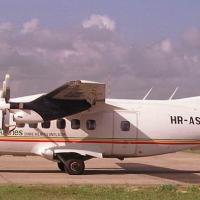
By Dennis Belan and Konstantin Antipin, this L410 skin depicts Atlantic, a Honduran operator running routes across the country. A reference image named ATL1.jpg accompanies the design, which ties t…
229.24 KB824Aug 20035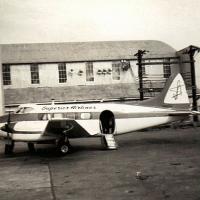 Repaint
Superior forms after strikes by Southern Airways pilots and operates five DeHavilland Doves across the southern United States, presenting a compact, regionally focused aviation operation during tha…
1.37 MB800Mar 20132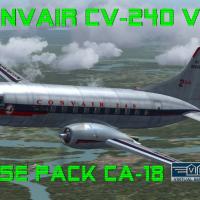 Base Model
The CA-18 variant presents a meticulously re-created late-1940s twin-prop airliner, with flight dynamics refined by FSAviator. Registration NX90846 appears in authentic Consolidated Aircraft colors…
4.33 MB786Mar 20131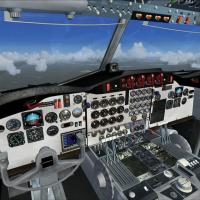 Patch
PatchFabio Cabral introduces new colors for the L-188 virtual cockpit, designed to accompany Buffalo edition content and to connect to L-188BUFFALO.ZIP, with emphasis on updated cockpit visuals. By Fabi…
9.17 MB784Mar 20134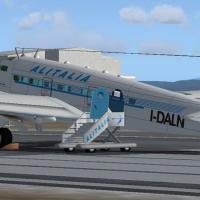 Base Model
Powered by a Fiat G12, the SM95 marks one of Alitalia’s early postwar airliners, entering service in July 1947 on the Roma-Oslo route and making its last flight in September 1954 as airliners with …
7.51 MB777Mar 2013 5/55
5/55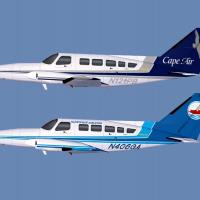 Repaint
This Cessna 402C edition for AI use presents four Cape Air airframes bearing a seagull silhouette on a blue field and three Nantucket Airlines tail-logo variants, all using Henry Tomkiewicz’s Utili…
845 KB764Mar 20131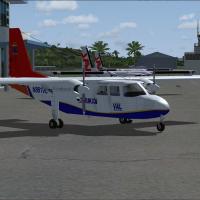 Base Model
Three BN-2 Islander variants include Vieques Air Link's standard BN-2 and turbine BN-2T Islander, plus Isla Nena, a fictional version. Each variant carries a distinct ATC ID: N663VL for Vieques Air…
5.07 MB735Mar 20134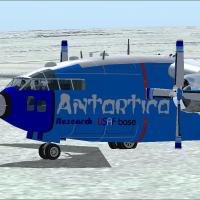 Base Model
Original model by Daisuke Yamamoto presents a U.S. Air Force C-119 variant named Antartica USAF, with a polished aluminium finish achieved through alpha-channel modification, and colorization by Fr…
3.66 MB735Feb 20136 Base Model
Jon Walton presents a Gmax-built version of the Aviation Traders Carvair, a DC-4 conversion, with a fully animated model and reflective and specular surfaces. Four markings are included representin…
3.94 MB734Feb 20131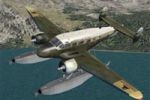 Base Model
Two variants present an amphibian with cargo and passenger configurations, featuring a custom era-correct panel and a readable virtual cockpit with backlit gauges, plus HTML checklists. The pontoon…
23.7 MB732Feb 20134/5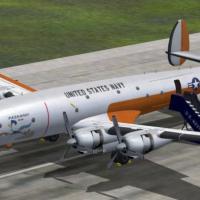 Base Model
Two variants, EC-121R and EC-121K, share a single model in this offering, with the R version camouflaged for the Vietnam war and the K version assigned to the Oceanographic Air Survey Unit (OASU). …
7.09 MB730Mar 20137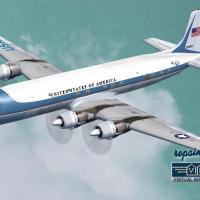 Base Model
Tail number 53-3240 and construction number 44611 appear in preserved colors, reflecting presidential service from 1961 to 1966. Since 1978 it is loaned by the U.S. Air Force Museum to Pima Air & S…
2.47 MB715Feb 20135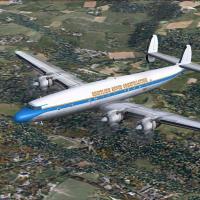 Base Model
Registered as N-73544, this model uses the latest .air file and a reworked cockpit instrument layout with night lighting and cockpit views. Mike Stone provides the airframe, with credits to Naegele…
12.84 MB714Feb 20138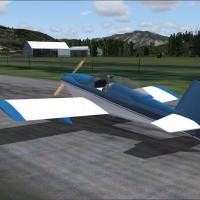 Base Model
By Gilles Arlove, the Vans RV3 presents as a high performance sports homebuilt aircraft featuring a virtual cockpit, movable controls, and a functional suspension, and notes reflective surfaces sha…
2.36 MB709Mar 20102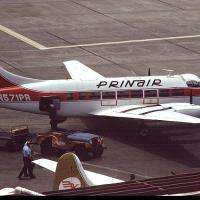 Base Model
Two variants exist: DH114-2D Heron Prinair and DH114-2D Prinair, both built on the DH114-2A base and bearing ATC IDs N114PR and N571PR. Carlos Marrero contributes the creation, while FSDS2 design c…
2.15 MB696Feb 20134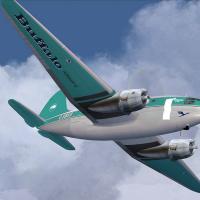 Repaint
By Markus Hellwig, this revision depicts the Hay River-based carrier's C-FAVO in a 2009 appearance for the Curtiss CW-20 Commando, with tail registration letters on the aft fuselage and a revised e…
3.5 MB693Mar 20132 Base Model
Three other models integrate to yield four LOD variants for the CT4 airtrainer, and the main model uses 1820 polygons, a figure noted within the specification for this variant and for referenced co…
289.08 KB674Mar 2010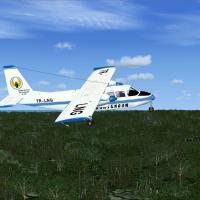 Base Model
Jacques Vallcaneras presents a BN-2 Islander in Transgabon color tones, built on Marcel Khunt's Britten Norman model. The package includes BN-2_Transgabon.zip and a cockpit panel that is slightly e…
8.85 MB673Mar 201310