Page 23
Searches the whole library — filter by sim & category on the results page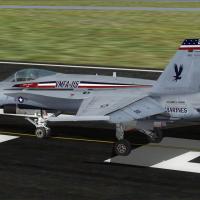
Ray Gagnon delivers a VMFA-115 variant for the default F-18, representing US Marines aviation. The variation uses atc_id 200, atc_airline MARINE, and atc_flight_number 200, with sim set to FA-18 an…
 3.12 MB
 180Sep 2011
 4
4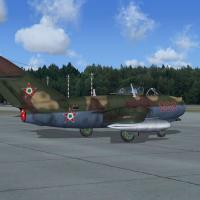 Payware Repaint
Bear Studios furnishes a MiG-15Bis Fagot B model configured as HUAF 069, with UI variation HUAF 069 and atc_id MiG paired to atc_flight_number 069 and airline designation Air Force. The manufacture…
3.17 MB175Jan 20133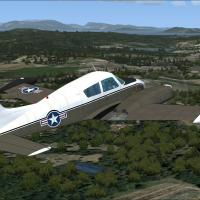 Repaint
The US Army U-3A variant, initially designated L-27A, comes from a USAF Cessna 310A with serial 57-5922 and construction number 38077, one of 160 ordered for general communications and later transf…
7.38 MB170Jan 20165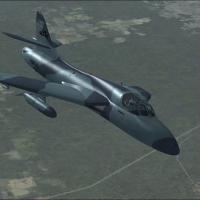
ATAC operates a two-seat Hawker Hunter variant, identified by N325AX, configured as a modified F.58 with a front two-seat fuselage section. A folder atacT accompanies the project, and the atc profi…
5.68 MB170Sep 20115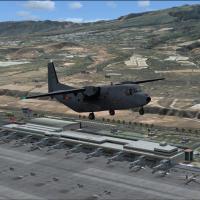 Repaint
Grey NATO numerals identify a CASA C-212-200 variant 46-38 assigned to 461 Sqdn., Ala 46, based at Gando AB in Gran Canaria. The configuration relies on a model by V. Zhyhulskiy, linked to CORREOS_…
7.32 MB168Feb 20169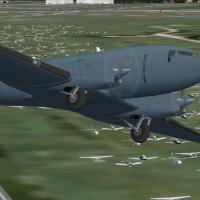 Repaint
An RTAF Basler BT-67 bears registration 46-158 and shows a subdued gray finish linked to a 2004 Thai Air Force photo dated August 26. The variant uses Basler_BT67_v1.6 and includes a [fltsim.X] ent…
12.86 MB167Jan 20135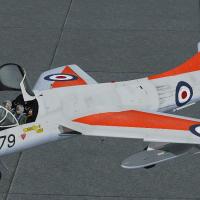
With the T8C designation and WT799 FRADU markings, this FRADU-trimmed two-seat Hunter traces its 1982 base at RNAS Yeovilton. The archive provides DDS data files for WT799, and the configuration as…
5.1 MB167Sep 20114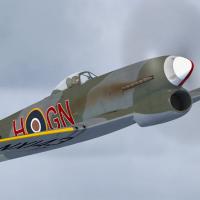 Payware Repaint
NX143 from 249 Squadron is represented as Tempest Mk VI, based at Habbaniya, Iraq in 1947. Wing-root intakes accommodate the Sabre V engine, while original layered PSD files by Brian Hill appear al…
7.11 MB165Feb 20161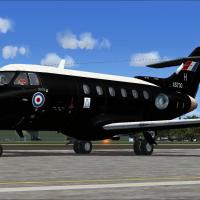 Repaint
Dominie T1 aircraft XS730 with c/n 25050 enters Royal Air Force service in December 1965 with 55 (R) Squadron at RAF Cranwell. In May 2011, it becomes N19UG and sits in storage at Kemble, Glouceste…
5.21 MB164Jan 20164 Repaint
Bertrand Barbe documents a Hawker Hunter T-68 variant labeled J4206, registered HB-RVV and used by Hunterverein. The configuration lists atc_id J4206, atc_airline Air Force, and ui_variation J4206 …
1.59 MB164Jul 20153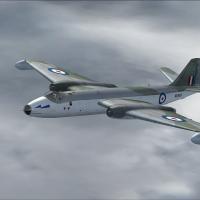 Repaint
By Henry William, the WD999 variant sits atop the AlphaSim Canberra model, reflecting Royal Air Force markings of the early 1950s. The offering uses a WD999 variation with atc_id WJ861 and a Hawker…
3.67 MB160Sep 20113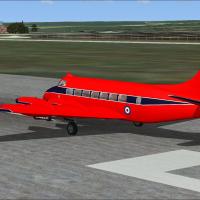 Payware Repaint
Four British Herons carry Queen's Flight markings, identified by atc_id values XH375, XM295, XM296, and XR391. Three undergo Saunders ST27 conversions; XH375 moves through a 1975 conversion and 198…
25.21 MB157Jan 20165 Repaint
Ray Gagnon delivers the Gunslingers Low-Vis variant for the F/A-18C Hornet, applying VFA-105 markings and subdued insignia that reflect carrier-based operations. ATC_id N411, ATC_airline NAVY, and …
4.1 MB157Sep 20111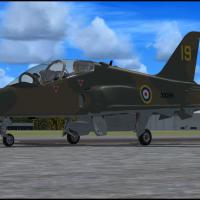
Gordon Barnes documents a 19 SQN Anniversary variant for the BAe Hawk T1, configured for front-seat operation, with ATC identifiers XX184 and flight number XX184. It references RAF Valley on Angles…
5.73 MB153Sep 20111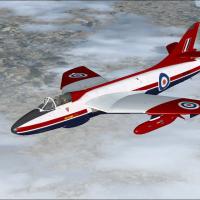
Visual variation for the Hawker Hunter FGA9 XE601 G-ETPS captures the aircraft as flown by Viper circa 2010, with color work credited to John Detrick. It relies on Dave Garwood's HUNTPAK6.ZIP basel…
1.75 MB151Sep 20115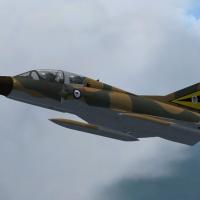 Repaint
RAAF's Mirage IIIE, A3-105 from No. 2 Operational Conversion Unit, is represented with a Mirage IIIB as the base. In April 1984 the real airframe suffers an undercarriage failure, ejects, and crash…
4.72 MB148Jul 20152 Paint Kit
By Manfred Jahn, a Photoshop PSD-based paintkit for a DC-3 variant features a 4096 by 2048 master page and alpha imagery. The package includes a separate HQ JPG alpha, and editing begins with C117_…
34.29 MB145Aug 20152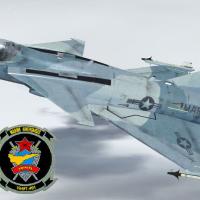 Payware Repaint
VMFT-401 designates the USMC aggressor squadron, presented as a F/A-201A Kestrel in Block 3 with the VMFT-401 variation, by John Detrick. ATC LS-12 anchors the designation, and the configuration li…
8.63 MB143Oct 20124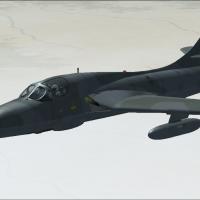
The Royal Omani Air Force two-seat Hawker Hunter variant is depicted as a T67 circa 1990, reflecting a Royal Omani Air Force trainer configuration. DG Designs delivers the modification, with John D…
2.17 MB142Sep 20116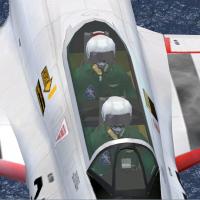 Repaint
An authentic Fuerza Aérea Mexicana variant of the Lockheed T-33A trainer is presented, with markings recreated by Genaro Dominguez atop Massimo Taccoli’s base model. It requires Taccoli’s base inst…
1.3 MB132Oct 20123